Message from the Registrar and CEO:
Blanketed in Love and Accountability
As we mark Orange Shirt Day and the National Day for Truth and Reconciliation, I want to reflect on a recent blanketing ceremony, and what it's taught me about love and accountability.
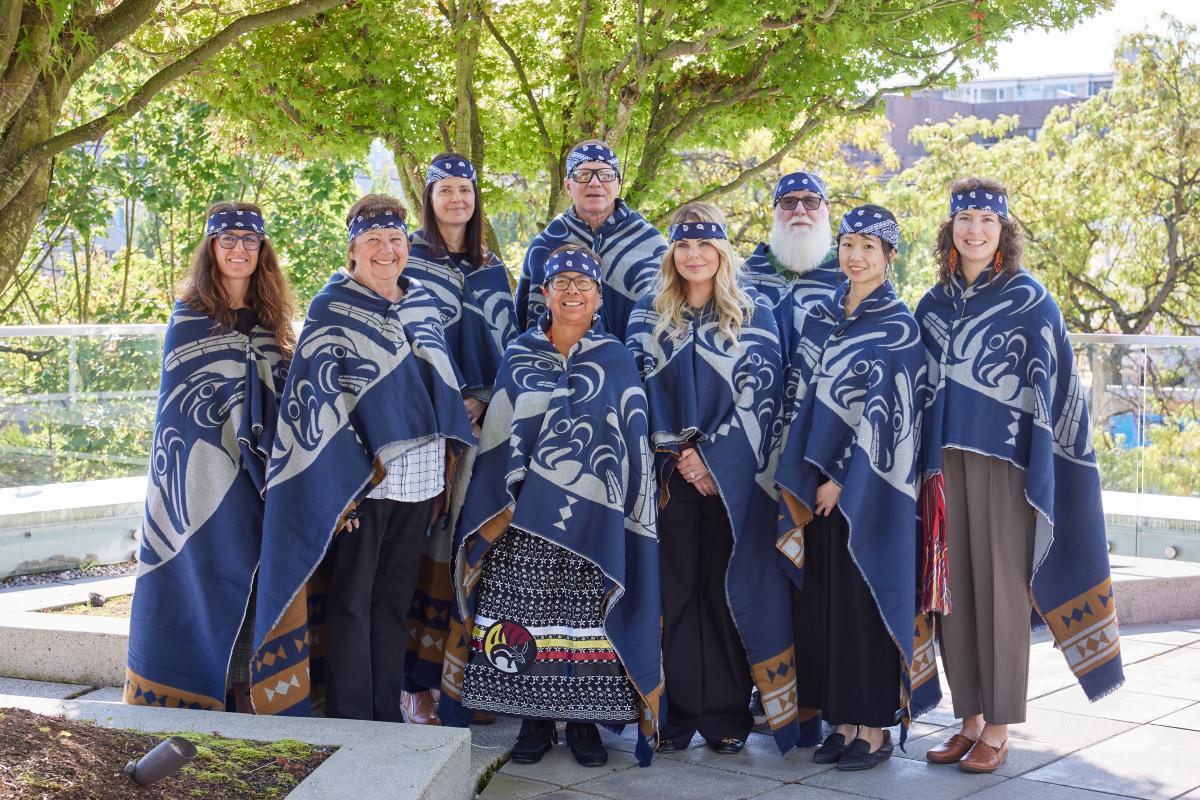
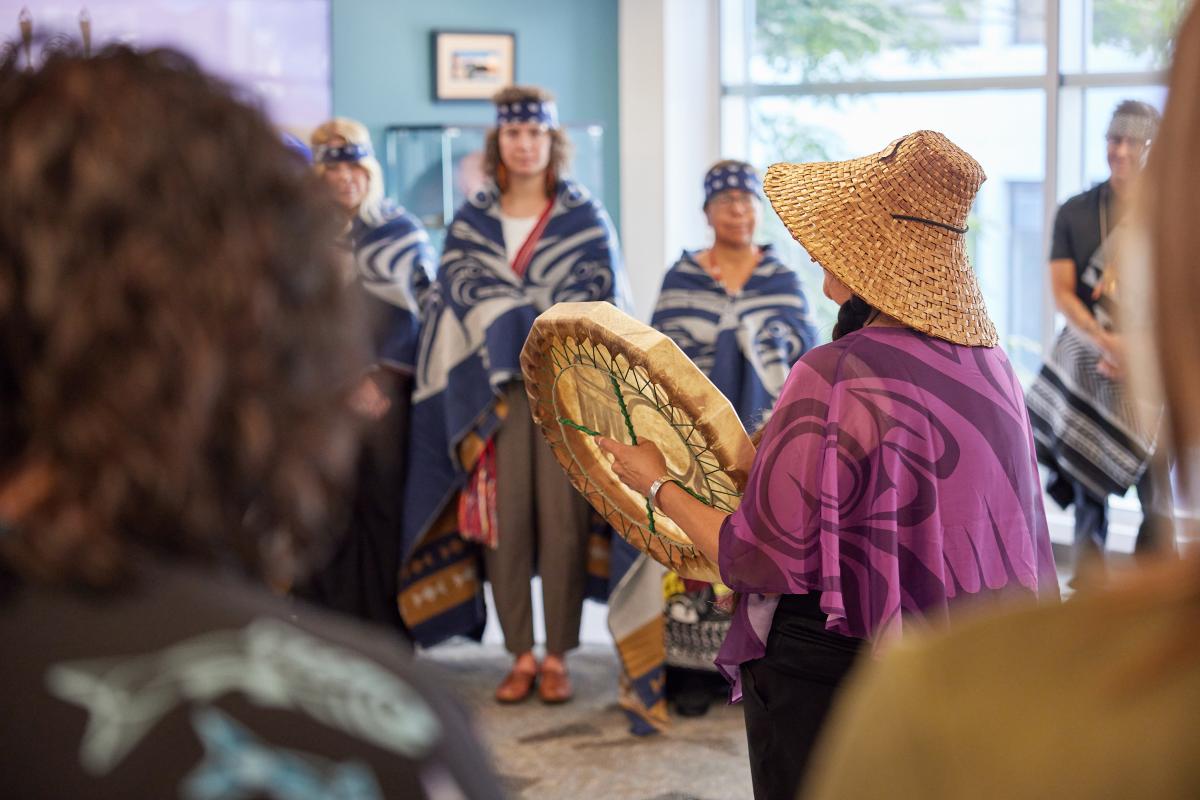
On September 18, our first Board under the Health Professions and Occupations Act took part in a Coast Salish blanketing ceremony. For those who don’t know, being blanketed is one of the highest forms of recognition that can be offered within Coast Salish culture. I’ve been honoured to have been blanketed myself before, so I understand the significance of the moment, and as I watched the Board, several of whom were receiving blankets for the first time, I was struck all over again by this significance.
The ceremony itself was such a beautiful thing to be a part of. I’m so grateful to Len Pierre, Malissa Smith, and Gabriel George Sr. for guiding us through the day, and to our own team who stood alongside them and helped to make sure the ceremony was handled with care.
We were also joined by several long-time partners who have walked this journey with us for years and who were there to serve as witnesses. In Coast Salish protocol, it’s an incredibly deep and important responsibility to witness, observe, remember and carry forward the events of the day.
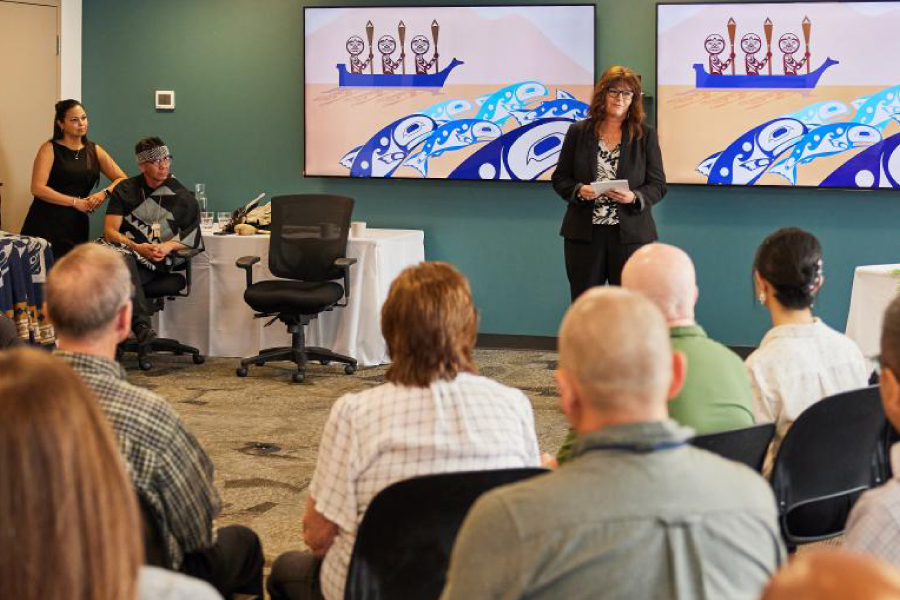
So many people in the room that day told me afterward how much Len’s teachings resonated with them and how he changed the way they understood the ceremony they had taken part in.
Len explained the history and role of blankets in Coast Salish culture, that traditionally, these blankets were woven by hand and could take up to a year to complete. He spoke about how the time and care required to weave them made them incredibly valuable to the wearer not just for the skill involved, but for what it meant to have had that much time invested in you.
He then said something that I’ve been thinking about since that day. He talked about how leadership can be a lonely place and that one of the reasons blankets are given to leaders as a way of telling them that they are seen, valued and supported by the people surrounding them. He told us to keep our blankets close, not to put them on shelves or in display cases, but to hold them and use them and to let them remind us of the time, care and investment they represent, and that others are there with us.
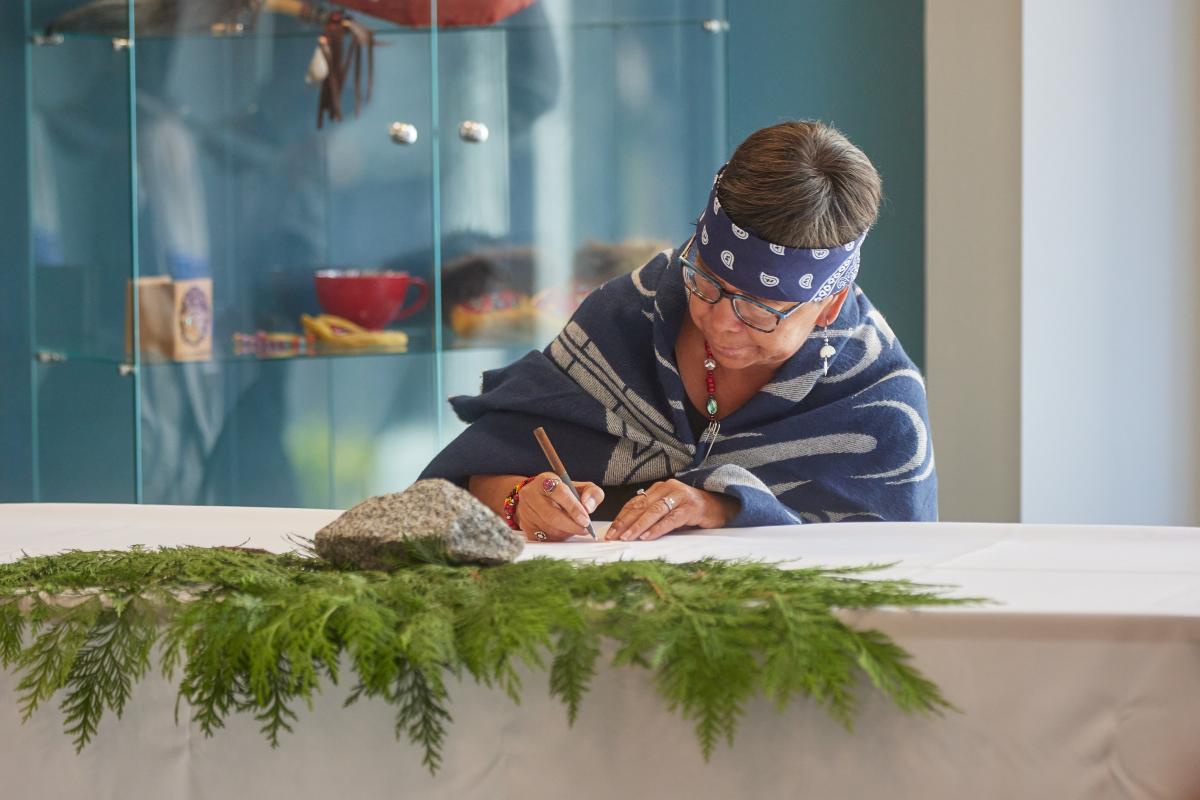
Alongside their blankets, our Board signed a declaration to uphold Indigenous Cultural Safety, Cultural Humility and Anti-Racism in everything they do. I want to acknowledge and thank them for showing up with openness, respect and commitment. For being so present during the ceremony and for stepping into this responsibility so fully.
One of our witnesses described a shift in the room as each Board member had their blanket draped over them. The way she put it, the Board walked into the room with a sense of seriousness and professionalism, and as each blanket settled on their shoulders, she watched them soften and relax into a sense of purpose.
I feel that same sense of purpose this month as we mark Orange Shirt Day and the National Day for Truth and Reconciliation. On September 30th, we remember the Indigenous children who were taken from their families and placed in residential schools. It’s a reminder of our collective duty to remember and acknowledge the tragedy, devastation and ongoing trauma caused by Canada’s residential school system.
As I think about this month, I think about the moment when the room settled into that purpose, because I think it really speaks to what a blanket actually is.
Most of us associate blankets with love, comfort, protection and care. But a blanket is also weight. And in Coast Salish cultures, for a leader to receive a blanket is to accept a responsibility, and to be accountable for how you carry it.
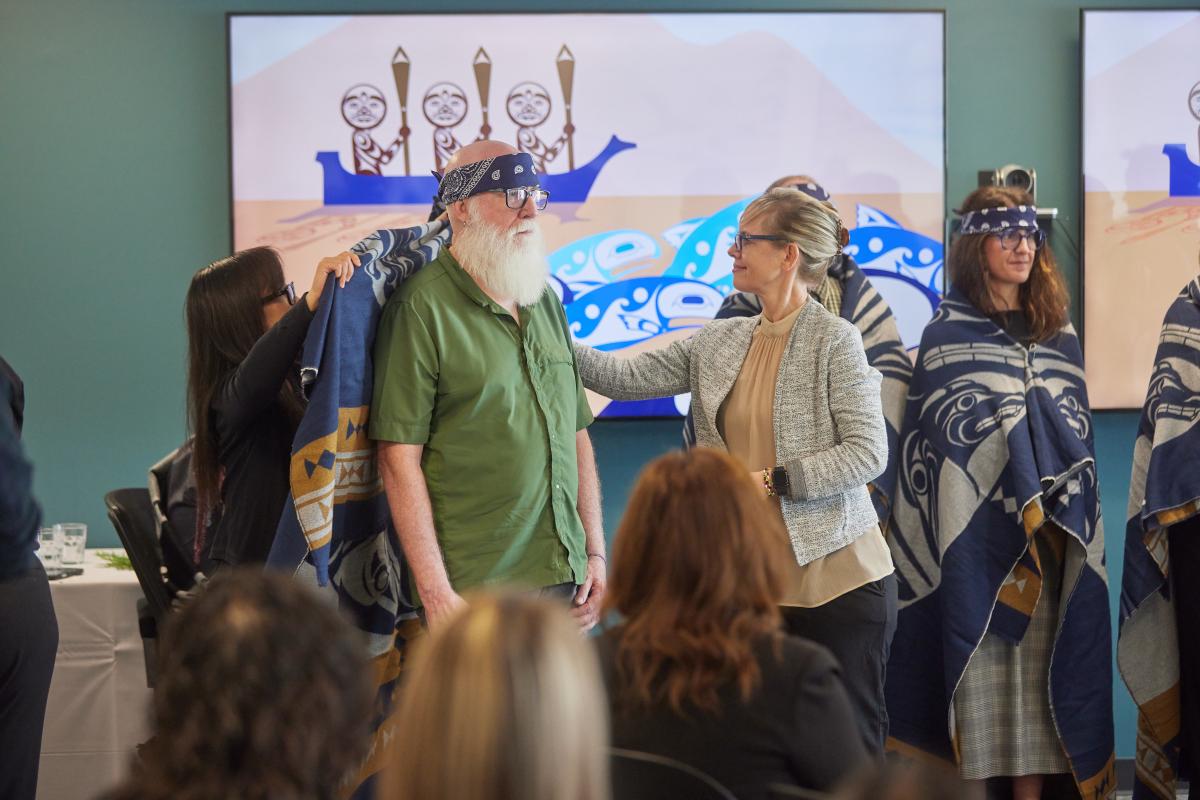
That's the duality I keep coming back to. Love and comfort on one side; responsibility and accountability on the other. And I think it's the same duality that September 30th asks of us. The love and comfort are in choosing to sit with this history without looking away, in holding space in our hearts for the Survivors, their families and their communities, and for the children who never came home. The responsibility and accountability are in what we do with that space once the day has passed.
That weight of responsibility and accountability is one we carry as an organization, too. As a public health regulator, we have a responsibility to make sure the professionals and spaces we regulate are genuinely safe for Indigenous Peoples. And that responsibility must be present in how we practice, how we regulate, and how we show up for Indigenous Peoples and communities on the days that make up the rest of the year.
As some of BC's most accessible healthcare providers, pharmacy professionals hold a real part of this responsibility. On September 30th, I encourage you to reflect on how you can contribute to this journey in the ways that you show up for the people and communities that you serve.
Please visit our webpage on Indigenous Cultural Safety, Humility, and Anti-Racism to explore resources, join the conversation and actively commit to reconciliation every day.