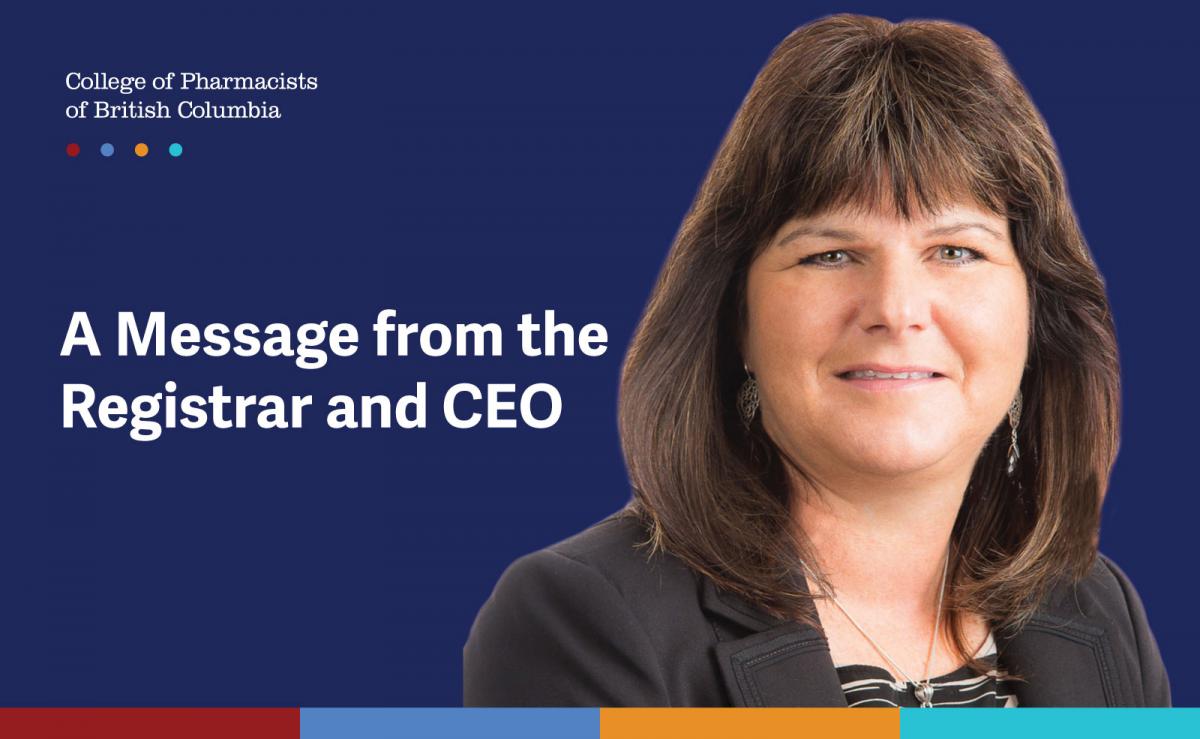
Message from the Registrar and CEO: Planning for Transitions in 2026
As I reflect on the past year, I’m reminded how much transition can reveal about what truly anchors our work. Some years bring transition in ways that make us return to the foundations of our work — the systems, relationships, and commitments that support safer care for people across the province. This has been one of those years.
Throughout the year, we’ve been listening to clients and families, Indigenous communities, pharmacy professionals and our partners across the health system. Their experiences have grounded our choices and reinforced that effective regulation begins with people. When we start from there, the direction forward becomes clearer, even in a time of significant change.
This focus on listening, learning, and strengthening our foundations has shaped much of our work this year, particularly as we prepare for the transition to the Health Professions and Occupations Act (HPOA).
Preparing for A New Chapter
With the HPOA coming into force next April, much of our work this year has focused on making sure we, as the provincial pharmacy regulator, are ready for that shift. We’ve been developing bylaws, consulting with registrants and the public, updating systems and processes, and working closely with other health regulatory colleges to build consistency in our approach to regulation under the new Act.
The HPOA ushers in a new chapter for health profession regulation in BC, and we’re now laying the groundwork to support this next era. It will change how we operate, but not why we do this work. Our mandate — public protection, to ensure safe and ethical pharmacy care — remains the same. What we’re building now is the foundation that will carry that mandate forward.
Strengthening Indigenous Pathways
Another essential foundation we continued to build this year was our work with Indigenous Peoples across BC. Throughout the year, members of our leadership team, including MaryAnn Enevoldsen, our first Director of Indigenous Pathways, joined partners from the First Nations Health Authority, UBC, and the Ministry of Health to visit First Nations communities including Kitsumkalum, Lax Kw’alaams, Yunesit’in, Songhees, Esquimalt, Tsa’out, Syilx Nation, Tla’amin Nation, and Tsay Keh Dene Nation. These visits were at the heart of our learning this year and offered perspectives we simply couldn’t have gained from a distance.
We heard from community members, health leaders, and pharmacy professionals about what culturally safe pharmacy care looks like for the people in their communities — and where harmful experiences such as dismissiveness, impatience, and racism still occur. What really stayed with me was the way these conversations were held. Even as people shared difficult experiences, there was a real generosity of spirit and an understanding of our common humanity—something that I think gets forgotten too often these days. Many community members talked about wanting to work more closely with local pharmacists—to build shared understanding around culture, trauma, medication coverage, and the role pharmacists play in their clients’ care. There was an openness to partnership and a sense that better, safer care is something we can build together.
Education is also a key part of this work. We’re already seeing more registrants completing the required three hours of Indigenous Cultural Safety, Cultural Humility, and Anti-Racism continuing education, and that momentum is encouraging. There is a growing list of learning activities available, and we’re working on additional resources that I’m really looking forward to sharing with you in the new year.
Protecting the Public Together
Throughout this year of transition and preparation, we’ve also been focused on understanding what’s really happening in pharmacy practice across the province. The Business Pressures Tip Line, our inspections and public conversations about the Expectations of Care poster, and the launch of CIRCL — including the webinars many of our registrants attended — each offered a different window into the same question: where are the pressures and gaps that put safe care at risk?
What we heard was consistent. Business-related pressures often make it difficult to provide the attentive, safe care people need. Clients told us the Expectations of Care poster is useful but often not visible enough to rely on. And the CIRCL webinars highlighted the need for practical, supportive guidance so that incident reporting can become a meaningful learning tool.
I also want to acknowledge the many registrants who have taken the time to submit tips through the Business Pressures Tip Line — and the fact that these continue to come in. Those reports help us better understand the pressures our registrants are experiencing and assist us in identifying meaningful solutions to enhance public safety.
These insights are helping us build stronger foundations for public protection — clearer expectations in pharmacies, better tools for learning from medication incidents, and a deeper understanding of the system pressures that affect care. They’re also shaping our work with partners such as ISMP Canada, the Ministry of Health, UBC, the BC Pharmacy Association, Canadian Society of Healthcare-Systems Pharmacy and other health regulators, ensuring that the systems we’re building reflect real practice and support safer care across the province.
Looking Ahead
As we close out the year, I’m reminded that moments of transition invite us to pause and reconnect with what matters most. The HPOA will change how we work, but it has also given us the opportunity to strengthen the systems, relationships, and expectations that support safer care across the province.
What gives me confidence in this moment is the openness I’ve seen throughout the year — the willingness of our partners to lean into change, even when it asks something new of us.
We’ll continue walking through this next chapter together, guided by the commitments that have grounded us so far: to listen deeply, to act relationally and practically, to be solutions-focused, and to keep the public at the centre of everything we do.
I’m grateful for our partnerships, our commitment and the dedication of our Board and staff, and I look forward to the good work we will continue in the year ahead.
Sincerely,
Suzanne Solven